Proudly serving Phoenix, Mesa, Scottsdale, Tempe, Chandler, Glendale & surrounding areasCall or Text 24/7: 602-449-0503
Aerial drone view of a desert residential neighborhood in Phoenix, AZ, featuring stucco homes and distant mountains.

Solar Panel Cleaning & Maintenance for Photovoltaic Arrays in Phoenix, AZ

Phoenix Pressure Washers provides solar panel cleaning for homes and commercial properties throughout Phoenix, Arizona. Our work covers residential rooftop arrays, warehouse and carport systems, bird-dropping removal, and recurring maintenance. We use pure water fed poles, deionized water, and soft brush heads designed for photovoltaic glass. We also handle the wider exterior cleaning needs described for local properties, from house and roof washing to parking areas and graffiti removal.

Fine caliche dust, pollen, mineral grit, and bird droppings can form a film that blocks sunlight before it reaches the photovoltaic cells. Phoenix receives roughly eight inches of rainfall a year, while summer haboobs can cover arrays in dust in a single afternoon. Short monsoon bursts may also leave hard water spotting instead of a clean rinse. Professional cleaning restores bare glass without exposing panels to concentrated pressure or hot water.

Our crews avoid standard pressure washers on panel surfaces and work within manufacturer guidance and IEC module standards.

Phoenix Pressure Washers provides solar panel cleaning throughout Phoenix and nearby Scottsdale, Tempe, Mesa, Glendale, and Chandler.

★ ★ ★ ★ ★4.9/5.0 Customer Rating · 19 Years of Exterior Cleaning Experience · Thousands of Properties Cleaned · Licensed & Fully Insured · Serving Homes, Businesses & HOAs

Phoenix Solar Panel Cleaning Benefits

What Is Professional Solar Panel Cleaning?

Professional solar panel cleaning removes the dust, pollen, mineral grit, and bird residue that interfere with sunlight reaching photovoltaic cells. The goal is a clean glass surface without stressing the panel, frame, seals, or anti-reflective coating.

Our pure water fed pole system runs deionized water through resin filtration to strip out minerals before the water reaches the array. It dries spot-free, so the glass does not need squeegeeing or wiping after the rinse.

Soft brush heads loosen buildup with controlled contact. We do not use high PSI or hot water on solar glass because concentrated force can crack tempered glass, affect coatings, or push water past seals toward junction boxes.

Benefits of Cleaning Phoenix Solar Arrays

A careful cleaning visit addresses both energy-blocking residue and the access concerns that come with rooftop equipment. It also creates a useful moment to compare production and visually review accessible array components.

  • Removes fine caliche dust, pollen, and mineral grit from panel glass
  • Reduces uneven shading that can affect an entire string of panels
  • Softens bird droppings without scraping the anti-reflective coating
  • Uses deionized water to prevent new mineral residue
  • Limits roof foot traffic with telescoping pole access when possible
  • Includes a visual check of visible wiring, racking, glass, and connectors
  • Prepares arrays for peak summer and post-monsoon production
  • Provides a spot-free result for before-and-after review
Panel Cleaning Services

Solar Panel Cleaning Services

Phoenix arrays collect different combinations of dust, mineral spots, storm debris, and bird residue. We tailor the service to the property, array footprint, access conditions, and cleaning frequency rather than treating every system the same way.

Residential Rooftop Panel Cleaning

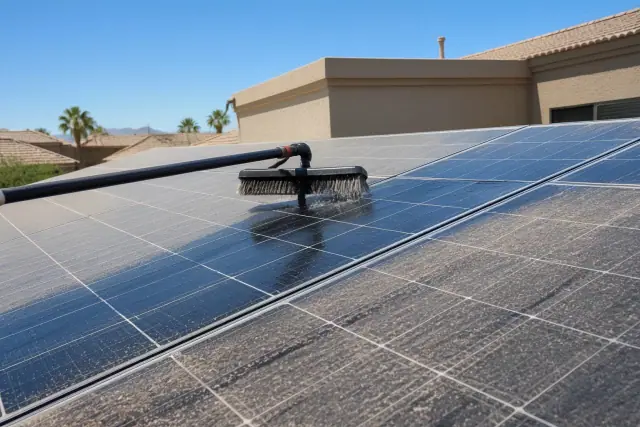
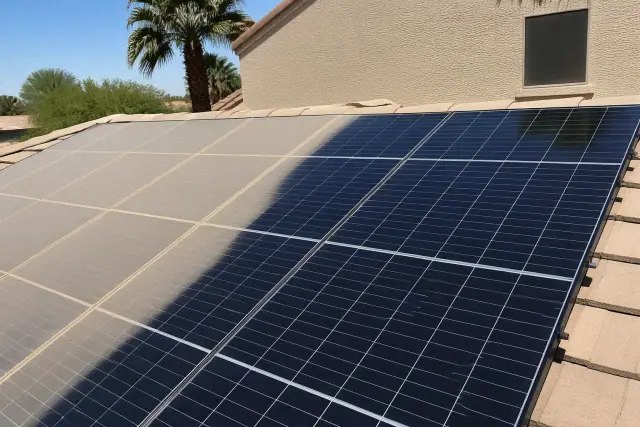
A contractor's photo of a partially cleaned solar panel array on a residential roof in Phoenix, AZ.

We clean home arrays on tile, shingle, and foam roofs using access paths suited to each surface. Pure water poles and soft brushes remove routine desert soiling while reducing unnecessary contact with the glass and roof.

Request Estimate

Commercial Array Cleaning

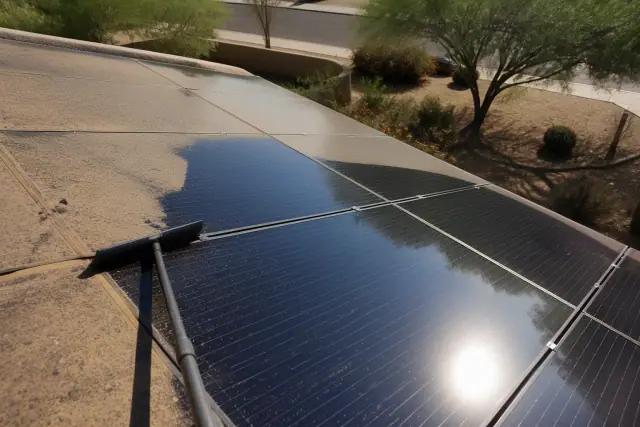
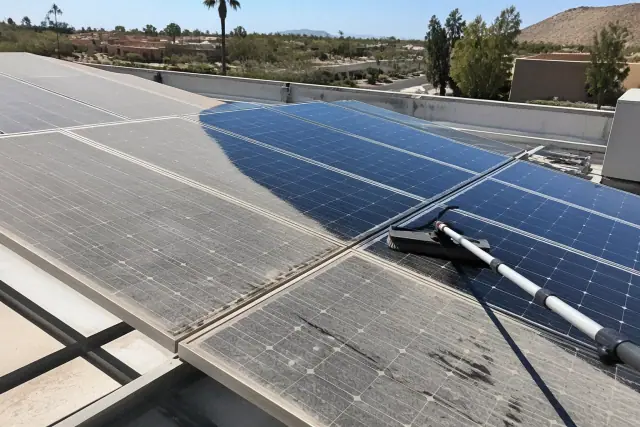
A dusty solar panel array on a flat roof being cleaned under intense sunlight in Phoenix, AZ.

Warehouses, distribution centers, rooftop commercial systems, carports, and ground-mount arrays require more scale and coordination than a home system. We adjust crew size and pure water capacity, then schedule work in sections so generation and business operations can continue.

Request Estimate

Monsoon Dust and Debris Cleanup

A technician cleaning monsoon dust and debris from solar panels on a residential roof in Phoenix, AZ.

Haboobs and monsoon storms can leave heavy dust, leaves, and debris across an array in one afternoon. When monitoring shows a sudden post-storm production drop, daily Salt River Valley routes may allow same-day or next-day cleaning for many Phoenix, Tempe, and Scottsdale addresses, depending on route location and system access.

Request Estimate

Bird Dropping Removal

A technician cleaning bird droppings from a residential solar panel in Phoenix, AZ.

We soften and lift dried bird droppings with pure water and soft-washing methods instead of scraping the glass. Crews also flag visible nesting activity beneath the array so the owner can address the open gap before debris becomes a recurring problem.

Request Estimate

Hard Water Spot Removal

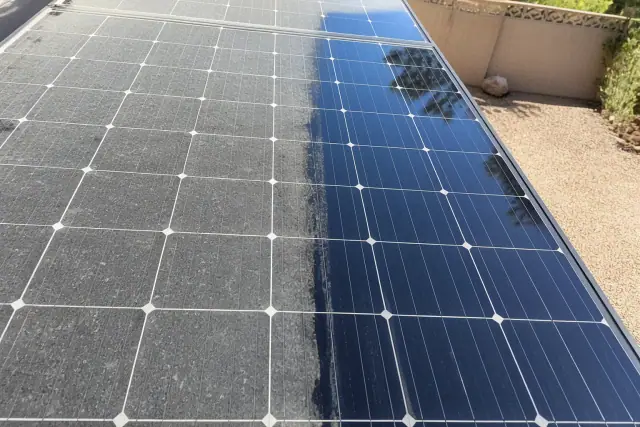
Hard water spot removal in progress on a residential solar panel in Phoenix, AZ, showing clean glass against dusty buildup.

Short desert rain events and tap-water rinsing can leave mineral deposits on solar glass. Our deionized rinse contains no mineral residue and dries spot-free after soft brushing removes the existing film.

Request Estimate

Recurring Panel Maintenance

A technician cleaning solar panels on a residential roof in Phoenix, AZ with a soft-bristle brush and water spray.

Recurring plans help owners clean before summer production and after monsoon season without waiting for heavy buildup. Customers on a plan receive priority scheduling ahead of peak summer demand, while the interval can be shortened for properties near unpaved roads, agricultural land, or active construction.

Request Estimate
Array and Property Options

Cleaning Plans by Array Type

The right cleaning plan reflects where the panels are mounted, how crews can reach them, when the property operates, and how quickly residue returns. These common Phoenix property and array types each call for a different access or scheduling approach.

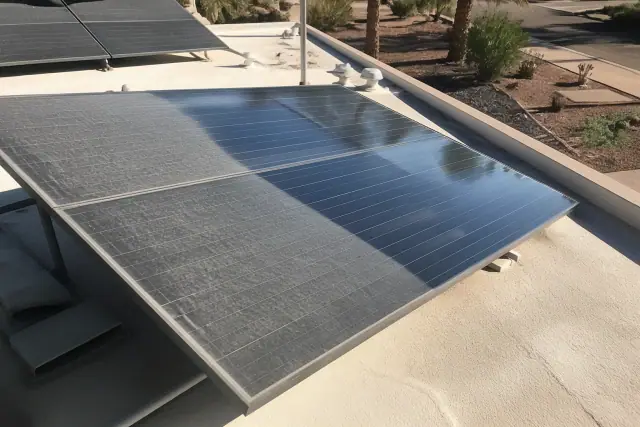
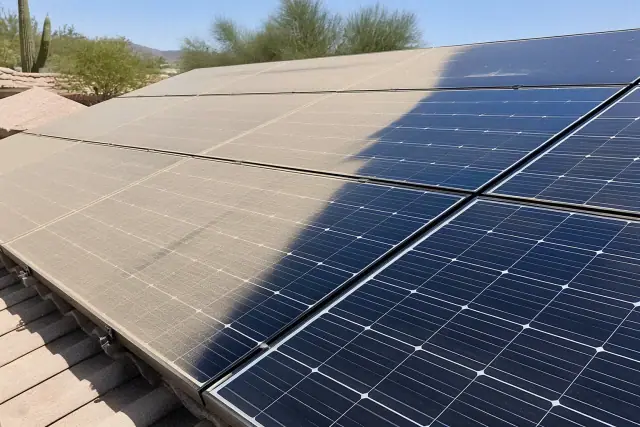
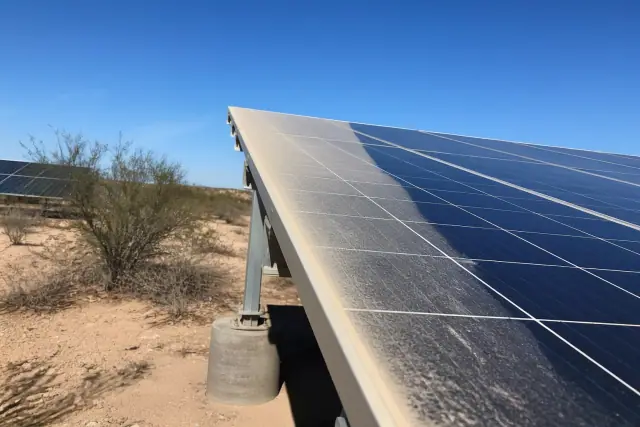
A solar panel on a Phoenix, AZ roof showing a clear divide between dusty and clean sections under bright sunlight.

Single-Family Rooftop Arrays

Home systems need a plan that balances glass cleaning with protection for the roof surface. A typical residential array of up to 20 panels can often be handled with telescoping poles and limited roof access.

  • Access adjusted for tile, shingle, or foam roofing
  • Soft-soled footwear when roof access is required
  • Telescoping pole cleaning from the ground when possible
  • Production comparison through the homeowner's inverter app
  • Timing before summer peak or after monsoon season
Request Estimate
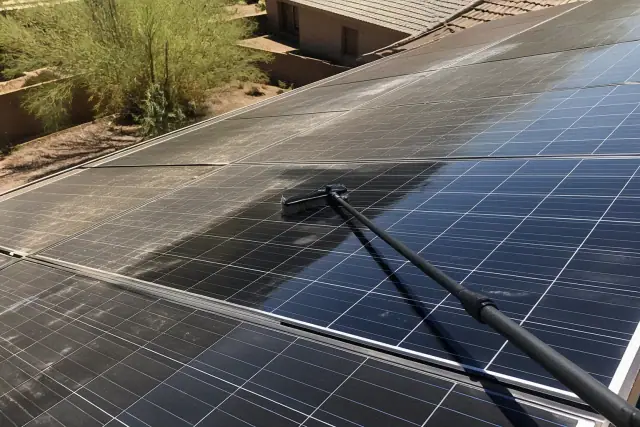
A technician cleaning commercial rooftop solar panels in Phoenix, AZ, showing a clear divide between dust and glass.

Commercial Rooftop Arrays

Commercial rooftops across Phoenix industrial corridors may cover much larger footprints than residential systems. Crew size, filtration capacity, access equipment, and work windows are planned around the facility.

  • Scaled for warehouses and distribution centers
  • Section-by-section cleaning keeps the system generating
  • Early-morning or off-peak scheduling when needed
  • Work documented for facility maintenance records
  • Custom quote based on footprint and access
Request Estimate
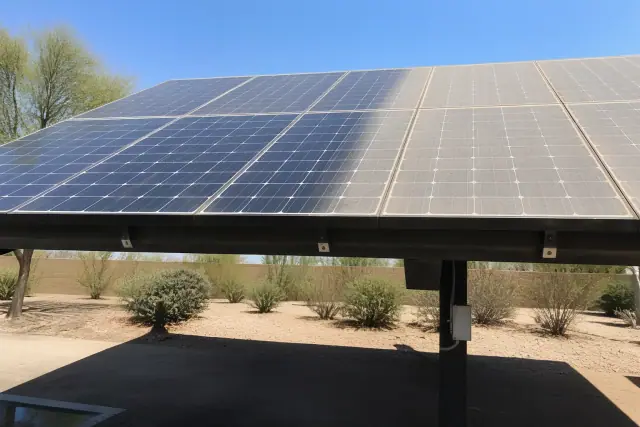
Solar panel array showing a clear contrast between dusty and cleaned surfaces at a jobsite in Phoenix, AZ.

Solar Carport Installations

Carport solar installations combine a broad array footprint with active parking and business traffic below. Cleaning is divided into practical sections and coordinated around quieter operating windows.

  • Access plan matched to carport height and footprint
  • Cleaning staged around parking and business activity
  • Pure water capacity scaled to the array
  • Spot-free drying without panel wiping
  • Commercial pricing based on scale and access equipment
Request Estimate
Technician cleaning dusty ground-mount solar panels in the desert sun in Phoenix, AZ.

Ground-Mount Field Arrays

Ground-mount fields avoid rooftop foot-traffic concerns but still require a system sized for a large panel count. The plan focuses on efficient pole reach, filtration capacity, and orderly progress across the array.

  • Pure water equipment scaled for large arrays
  • Soft brushes for dust, pollen, and bird residue
  • Orderly section-by-section progress
  • Visual review of accessible racking and wiring
  • Custom quote based on array size
Request Estimate
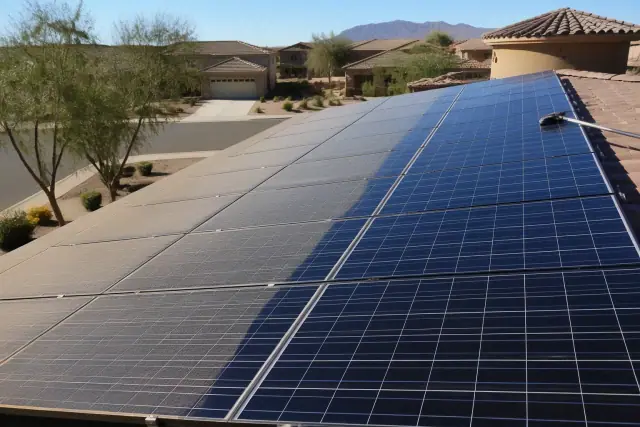
Solar panels in Phoenix, AZ, showing a clean, reflective section next to dusty panels on a residential roof.

Recurring Maintenance Plans

Most Phoenix homeowners do well with twice-yearly cleaning, while dusty sites may need quarterly visits. Recurring plans are generally priced around $2 to $5 per panel per month when billed on a bi-monthly cleaning schedule, with final pricing affected by frequency and contract length.

  • First seasonal visit before peak summer production
  • Second visit after monsoon season ends in September
  • April or May timing for the pre-summer cleaning
  • Quarterly option near unpaved roads, farms, or construction
  • Priority scheduling ahead of peak summer demand
Request Estimate
Finding Your Right Fit

Choosing the Right Cleaning Approach

Start with the panel count, mount type, roof pitch, story height, access, and the kind of buildup on the glass. Then use production monitoring and the property's dust exposure to decide whether a one-time visit, twice-yearly schedule, or quarterly plan is the better fit.

Deionized Pure Water

Resin filtration removes minerals from the rinse water before it reaches the panels. That pure water dries spot-free and reduces the need for squeegees or extra wiping on photovoltaic glass.

Phoenix Route Coverage

Crews run daily routes across the Salt River Valley. Route location and array access determine whether an address in Phoenix, Tempe, or Scottsdale can be fitted into same-day or next-day availability.

Roof-Safe Access

Telescoping poles reach many two- and three-story arrays from the ground. When roof access is necessary, crews use soft-soled footwear and rated load paths, with walking patterns adjusted for tile, shingle, or foam roofs.

What Sets Us Apart

Why Choose Us for Phoenix Panel Cleaning?

Phoenix Pressure Washers uses panel-specific soft brushes, pure water equipmentand access methods chosen for the roof and array. Crews work within manufacturer guidance and IEC module standards; for commercial properties, the company carries insurance coverage, follows OSHA fall protection and ladder safety standardsand documents the work for maintenance records.

Request a Cleaning Estimate

Desert Dust Film

Low humidity and roughly 8 inches of annual rainfall allow caliche dust, pollen, and mineral grit to remain on Phoenix arrays. The film can build faster around unpaved roads, agricultural land, and active construction.

Mineral Water Spots

Phoenix rain often arrives in short, intense monsoon bursts that may leave hard water spotting and mineral deposits behind. Tap-water rinsing can create the same problem, which is why the final rinse uses deionized water.

Bird Droppings and Nest Debris

Pigeons and doves use the shaded gap below rooftop arrays for shelter, leaving droppings, feathers, and nesting material around the panels and racking. Dried residue is acidic and can etch glass or frame coatings when it remains in place.

Partial Shading and Hot Spots

Dust can settle unevenly, allowing a shaded or partially blocked cell to affect output across an entire string. Heavy buildup around cell edges or beneath bird residue can also create localized hot spots that add stress to that part of the panel.

High-Pressure Damage Risk

A standard pressure washer can stress tempered glass, damage anti-reflective coatings, or drive water past seals toward junction boxes. Solar panels call for low-force pure water and a soft brush rather than concentrated high PSI or hot water.

Declining Energy Output

A gradual decline over several weeks in an inverter monitoring app often points to dust buildup, while a sudden drop may indicate storm debris or an equipment issue. Comparing daily kWh output before and after cleaning helps owners see the change on the next sunny day.

How it works

Our Solar Panel Cleaning Process

Each visit moves from access review to a spot-free final check. The process protects the roof and array while matching equipment, crew scale, and scheduling to the property.

01.

Review Panel Count and Access

We review the panel count, roof pitch, story height, mount type, visible buildup, and access equipment the job may require. Those factors support an upfront quote before scheduling.

02.

Select a Safe Access Path

The crew chooses a ground-based telescoping pole route whenever practical. If roof access is needed, foot placement and anchoring are adjusted for tile, shingle, or foam roofing, and walking stays on rated load paths.

03.

Prepare Deionized Pure Water

Water passes through resin filtration before entering the fed-pole system. Removing minerals at this stage prevents the rinse from adding new hard water spots or residue.

04.

Soften and Brush the Buildup

Pure water softens dust, pollen, mineral film, and dried bird residue. Panel-specific soft brushes lift the buildup without scraping the anti-reflective surface or applying high pressure.

05.

Rinse and Inspect Visible Components

The array receives a complete deionized rinse while work proceeds in manageable sections. Crews visually check accessible wiring, connectors, glass, and racking and flag any loose, cracked, or unusual condition they can see.

06.

Confirm Spot-Free Results

Pure water dries without squeegeeing or wiping, allowing a before-and-after check for a spot-free surface. Owners can then compare monitoring data on the next sunny day and choose a future interval based on how quickly output declines.

Restore a Clear Panel Surface

Request a Solar Panel
Cleaning
Estimate

Share the panel count, property type, roof or mount details, and the buildup you can see. Phoenix Pressure Washers will review the access factors and explain the quote before the cleaning is scheduled.

Solar Cleaning Help

Phoenix Solar Panel Cleaning FAQs

Get practical answers about Phoenix solar panel cleaning prices, methods, timing, access, and commercial service. The details below reflect the desert conditions and array types covered on this page.

Call About Panel Cleaning

Phoenix market pricing generally runs $8 to $25 per panel, with most full-service residential visits between $150 and $300. Panel count, roof pitch, story height, access, and heavy bird or mineral buildup affect the final quote.

A typical residential system of up to 20 panels usually falls in the $200 to $300 range for one visit. That range covers many single-family rooftop arrays in the Valley, with roof access and buildup determining the exact price.

A typical 10kW system with around 10 percent soiling loss can lose about $180 to $270 a year in production at Arizona electricity rates near 15 cents per kWh. Cleaning is especially relevant for properties exposed to bird activity, unpaved-road dust, or construction and for owners who rely on peak summer output.

Most Phoenix properties do well with cleaning twice a year: once in April or May before peak summer production and again after monsoon season ends in September. Properties near unpaved roads, agricultural areas, or active construction may need quarterly cleaning instead.

Rain may rinse off light surface dust, but Phoenix receives about eight inches of rainfall a year and does not get frequent natural rinsing. Short monsoon bursts can leave mineral deposits and hard water spots, while deionized water dries without that residue.

The method described here uses a pure water fed pole, deionized water, and a soft brush head designed for photovoltaic glass. The mineral-free water dries spot-free, reducing the need to squeegee or wipe the panel surface.

Standard pressure washing is not used on the panel surface. High PSI or hot water can stress tempered glass, affect anti-reflective coatings, or force water past seals into junction boxes, so the service uses low-force pure water and soft brushing instead.

Commercial work is divided into sections so the rest of the system can keep generating. Crew size and pure water capacity are scaled to the array, and work can be coordinated for early-morning or off-peak windows around business operations.

Check the inverter app or monitoring system for a sudden production drop and look for visible dust, leaves, or debris from the ground. Daily Valley routes can support same-day or next-day service for many Phoenix, Tempe, and Scottsdale addresses when route location and array access allow.

Dried droppings are softened with pure water and removed with a soft brush rather than scraped from the glass. If nesting is visible beneath the array, the crew flags it so the owner can arrange an exclusion solution before the buildup returns.

A standard visit includes a full panel rinse and soft wash with deionized water, removal of dust, pollen, and bird droppings, and a visual inspection of accessible wiring and racking. A before-and-after check confirms that the panel surface is spot-free.

The Arizona Corporation Commission sets utility interconnection and net metering rules, while local jurisdictions in Maricopa County require permits for installation work and major system work requires the appropriate Arizona Registrar of Contractors licensing. Cleaning and maintenance are outside those installation-specific requirements, and this service follows OSHA fall protection and exterior-cleaning safety practices.

Consumer-grade water-fed pole and deionized filtration kits generally cost a few hundred dollars, while professional pure water systems cost considerably more. Hiring a professional avoids maintaining that equipment and reduces the risk of scratching panels or conflicting with manufacturer warranty requirements through improper cleaning.