Proudly serving Phoenix, Mesa, Scottsdale, Tempe, Chandler, Glendale & surrounding areasCall or Text 24/7: 602-449-0503
Aerial drone view of a desert residential neighborhood in Phoenix, AZ, featuring stucco homes and distant mountains.

Graffiti & Tough Stain Removal for Commercial & Residential Facades in Phoenix, AZ

Phoenix Pressure Washers provides graffiti and stain removal for homes, storefronts, commercial properties, and managed facilities throughout Phoenix, Arizona. We remove spray paint, marker, oil, rust, grease, tire marks, and paint spills from stucco, block, brick, concrete, asphalt, metal, wood, glass, and tile. Surface-specific methods range from hot water pressure washing to controlled solvent, degreaser, surfactant, and specialty treatments. We also coordinate related exterior cleaning for driveways, patios, pool decks, parking areas, dumpster pads, and building facades.

Phoenix UV exposure and summer surface heat can bake paint into porous masonry, so removal is usually easier before it cures. The first 24 to 48 hours offer the strongest opportunity for full removal without residual shadowing, while tags left for a week or more may require multiple treatments. Crews pressure-test a hidden area, then adjust water temperature, PSI, nozzle selection, chemical dwell time, and rinse technique for the substrate. This measured approach helps lift the mark without stripping stucco finishes, splintering wood, scratching glass, or etching concrete.

Hot water systems run up to 200-plus degrees, and treatment options include citrus- and soy-based graffiti solvents, biodegradable degreasers, alkaline cleaners, and rust-specific chemistry. Licensed and insured technicians follow OSHA surface-cleaning safety protocols, manage adjacent landscaping and runoff, and provide before-and-after photos when documentation is needed. Free on-site or photo-based estimates are available, with same-day and next-day scheduling depending on crew availability and job scope.

Phoenix Pressure Washers provides graffiti and stain removal throughout Phoenix and the surrounding metro, including Scottsdale, Tempe, Mesa, Glendale, and Chandler.

★ ★ ★ ★ ★4.9/5.0 Customer Rating · 19 Years of Exterior Cleaning Experience · Thousands of Properties Cleaned · Licensed & Fully Insured · Serving Homes, Businesses & HOAs

Graffiti Removal Methods & Benefits

What Is Professional Graffiti Removal?

Professional graffiti removal combines water pressure, temperature, mechanical agitation, and chemistry to break the bond between paint and the underlying surface. The method changes with the paint type, surface porosity, finish, and time the mark has been exposed.

Aerosol paint on sealed concrete or coated metal often responds well to hot water and a matched solvent. Porous stucco, brick, and unsealed block usually need lower pressure, longer dwell time, and careful post-treatment to reduce pigment shadowing.

No single technique removes every mark from every material. Permanent marker, etched glass or tile, and repeatedly painted-over tags may call for glass-safe polishing compounds, media blasting, or a combination approach after an on-site assessment.

Benefits of Surface-Safe Removal

A surface-matched plan addresses the unwanted paint or stain while protecting the material beneath it and the areas around the work zone.

  • Treats fresh graffiti before pigment cures into surface pores
  • Matches pressure and dwell time to porous or sealed materials
  • Uses hot water to soften oil-based paint, grease, and set-in residue
  • Pairs citrus solvents, degreasers, or rust treatments with the contaminant
  • Reduces the risk of stucco damage, wood splintering, and glass etching
  • Controls runoff around landscaping, storm drains, pets, and foot traffic
  • Documents completed work for property managers, HOAs, or insurance files
  • Restores the surrounding surface evenly to limit visible cleaning patches
Surface & Property Services

Phoenix Graffiti & Stain Services

Each service starts with the contaminant, substrate, finish, access, and exposure time. That allows Phoenix Pressure Washers to plan residential and commercial cleanup without forcing every surface through the same pressure or chemical treatment.

Spray Paint and Marker Removal

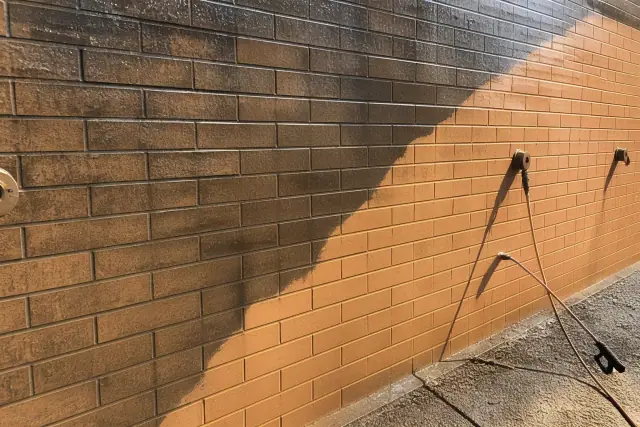
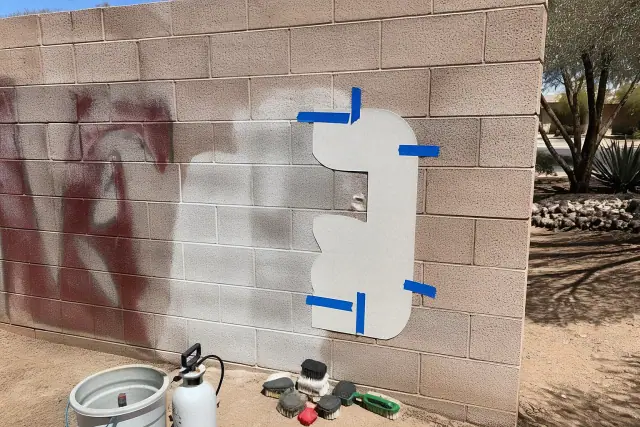
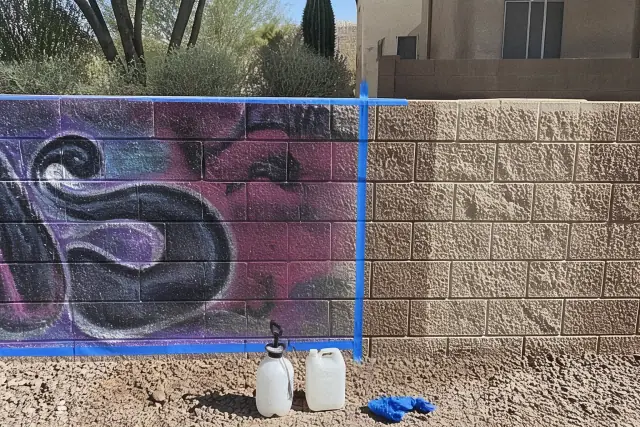
A brick wall in Phoenix, AZ showing a section of graffiti being removed with cleaning solvents and masking tape.

Fresh aerosol paint on sealed surfaces may lift with hot water and a citrus- or soy-based solvent. Permanent marker and deeply cured pigment are assessed separately so the treatment does not spread the stain or damage the finish.

Request Estimate

Storefront and Facade Cleanup

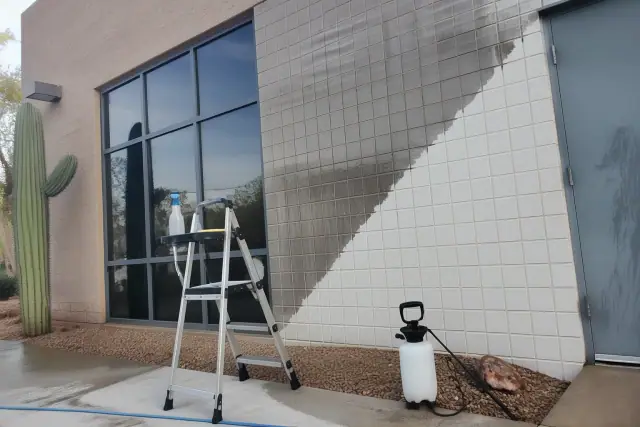
Technician cleaning dirty brick masonry on an industrial building wall in Phoenix, AZ.

Street-facing windows, door frames, exterior signs, stucco, and EIFS facades receive material-specific testing before cleanup. Glass-safe, tile-safe, and metal-safe treatments help clear visible vandalism without scratching or etching finished surfaces.

Request Estimate

Residential Wall and Fence Cleaning

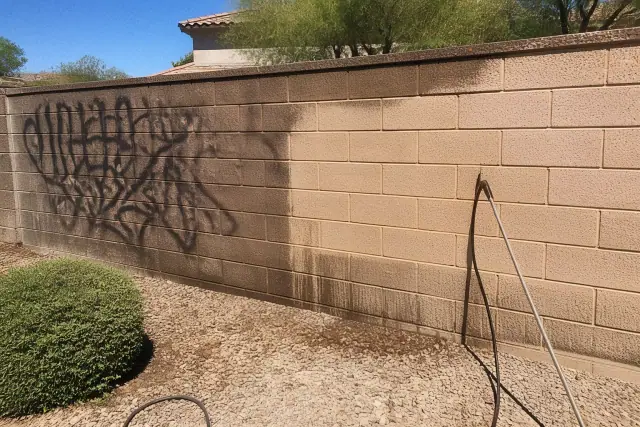
A contractor cleaning graffiti from a masonry wall in a Phoenix, AZ residential yard.

Residential work includes tagged block walls, painted walls, wood privacy fences, driveways, and garage areas. Pressure is reduced for raw wood and painted finishes to avoid splintering grain or stripping the coating beneath the graffiti.

Request Estimate

Oil, Grease, and Rust Stain Removal

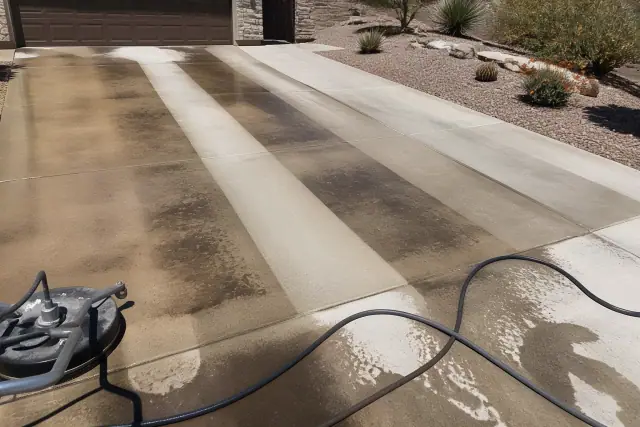
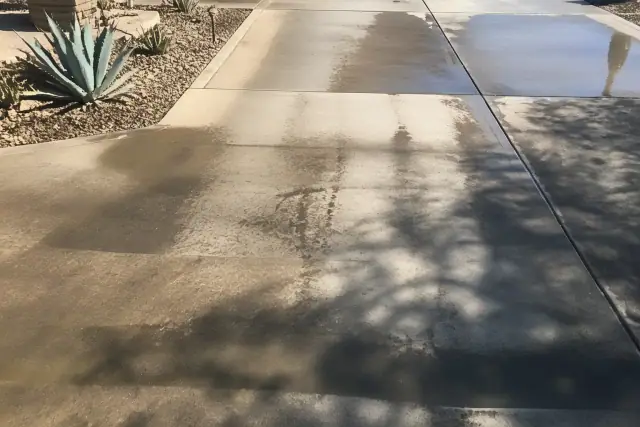
Concrete driveway in Phoenix, AZ showing clean stripes from surface cleaning on oil and rust stains.

Hot water extraction and degreasing agents pull motor oil, transmission fluid, and grease from concrete pores. Acid-based or chelating treatments target iron oxide from sprinkler rings and metal furniture without using the same chemistry as an oil stain.

Request Estimate

Parking Area and Sidewalk Cleanup

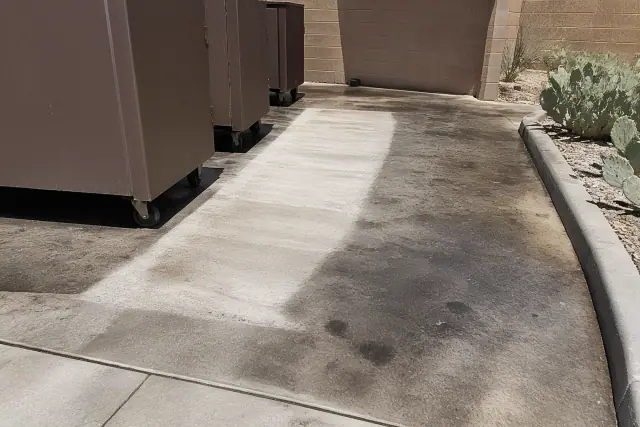
Cleaned concrete floor around trash bins with prickly pear cacti in Phoenix, AZ.

Commercial cleanup can cover parking garages, parking lots, striping stains, sidewalks, dumpster enclosures, and drive-thru areas affected during the same incident. Grouping related exterior cleaning can restore the wider property instead of leaving a clean spot surrounded by older buildup.

Request Estimate

Paint Spill and Surface Restoration

Contractor cleaning a paint spill off a brick wall in Phoenix, AZ, using removal tools and a masking template.

Old remodeling spills require chemistry matched to latex or oil-based paint because the wrong solvent can smear the stain wider. Even chemical distribution and post-treatment rinse cycles help blend the cleaned area and reduce a lighter or darker patch on porous concrete.

Request Estimate
Surface-Specific Methods

Removal Methods by Surface

Surface porosity and finish determine how much pressure, heat, dwell time, and restoration work a mark can safely receive. These five material groups show why professional graffiti and stain removal is an assessment-led service.

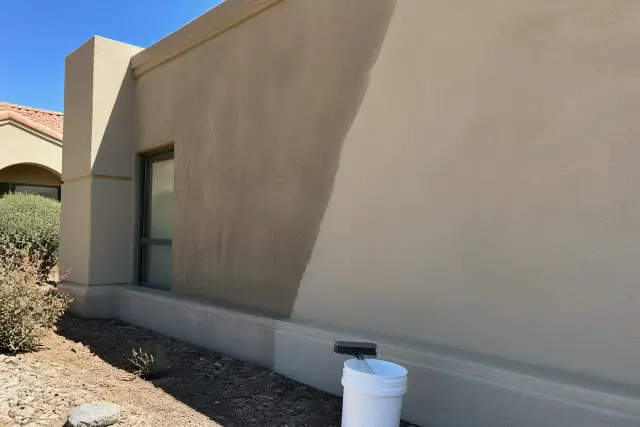
Stucco and EIFS facade restoration on an industrial building in Phoenix, AZ, showing cleaned and weathered wall sections.

Stucco and EIFS Facades

Finished facades can absorb pigment while remaining vulnerable to excessive PSI, so the goal is controlled cleaning that preserves the finish coat.

  • Lower pressure for soft, porous exterior finishes
  • Longer chemical dwell time for absorbed paint pigment
  • Graduated testing on a small hidden section
  • Even treatment beyond the center of the visible mark
  • Post-treatment restoration to reduce residual shadowing
Request Estimate
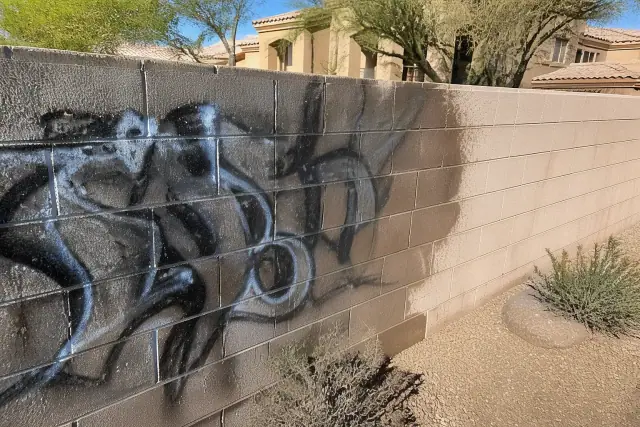
A clean masonry wall showing the transition from graffiti to original stone in a Phoenix, AZ desert landscape.

Block, Brick, and Masonry

Unsealed block is among the most difficult surfaces because pigment can travel deep into open pores. Masonry graffiti may need two or three treatment passes instead of one aggressive pass.

  • Porosity assessment before pressure or chemistry is selected
  • Surface-safe solvent chosen for the paint type
  • Hot water used where the masonry condition allows it
  • Repeated controlled passes for deeply absorbed pigment
  • Restoration treatment when ghosting remains visible
Request Estimate
Clean stripes from surface cleaning on a residential concrete driveway in Phoenix, AZ, showing oil stain removal.

Concrete and Asphalt

Driveways, sidewalks, parking areas, and slabs may carry vandalism along with older oil, rust, tire, grease, or paint stains.

  • Spray-paint treatment for sealed or porous concrete
  • Degreaser and hot water extraction for petroleum residue
  • Rust-specific treatment for iron oxide marks
  • Controlled cleaning around striping and adjacent finishes
  • Full-surface rinse cycles to even out the final appearance
Request Estimate
Technician cleaning glass, tile, and finished metal on an industrial building in Phoenix, AZ.

Glass, Tile, and Finished Metal

Nonporous finished surfaces often release paint more readily, but scratching, etching, and coating damage remain important risks.

  • Glass-safe treatment for storefront windows
  • Tile-safe chemistry for hard finished surfaces
  • Solvent removal for paint sitting on coated metal
  • Specialty polishing assessment for etched vandalism
  • Compatibility testing before treating the full surface
Request Estimate
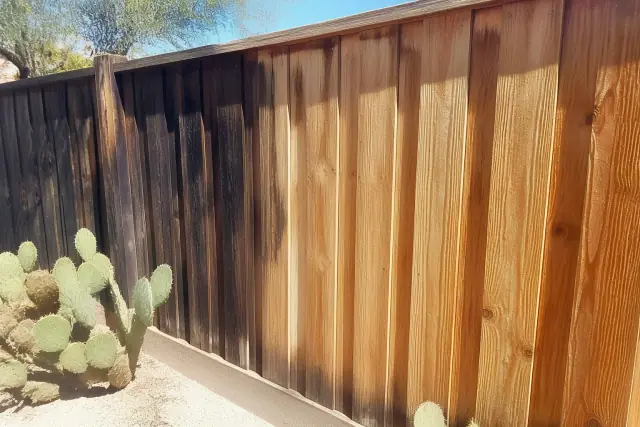
Wood fence panel showing graffiti removal progress with prickly pear cacti in the background in Phoenix, AZ.

Wood and Painted Finishes

Raw wood and painted walls need a lighter touch because high pressure can raise grain, splinter fibers, or remove the original coating.

  • Lower-pressure cleaning for privacy fences and raw wood
  • Nozzle control designed to protect the wood grain
  • Calibrated treatment for painted block and wall finishes
  • Chemistry selected around the existing coating
  • Inconspicuous testing before wider application
Request Estimate
Match Method to Material

Choosing the Right Removal Approach

The right approach depends on paint type, age, porosity, finish, coverage area, height, accessibility, and whether hot or cold water is appropriate. Phoenix Pressure Washers explains when pressure washing alone is likely to work and when etched glass, permanent marker, or multi-layer tagging may need media blasting, polishing compounds, or a combined method.

Surface Testing Before Treatment

Crews test pressure and chemical compatibility on a small inconspicuous area before full application. Graduated testing helps set PSI, nozzle selection, dwell time, and rinse technique around the actual substrate instead of relying on a one-setting-fits-all method.

Phoenix Climate and Fast Response

Phoenix summer daytime temperatures regularly exceed 110 degrees, while exposed concrete, stucco, and metal surfaces can exceed 140 degrees. Acting within 24 to 48 hours helps before paint sets within 48 to 72 hours, while a mark left for 30 days or more can bond much more deeply to porous material.

Documented, Covered Service

Phoenix Pressure Washers is licensed and insured and carries general liability coverage for commercial and residential work. Technicians are trained on OSHA surface-cleaning safety protocols, and before-and-after photos can support property management files, HOA records, or insurance claims.

What Sets Us Apart

Why Choose Phoenix Pressure Washers for Graffiti Removal?

The crew arrives prepared to move between soft stucco, hardened concrete, finished metal, glass, tile, and wood using surface-matched equipment and chemistry. Estimates are provided before work begins, and rapid scheduling, careful testing, runoff control, final inspection, and optional documentation keep the cleanup clear from assessment through completion.

Get a Free Estimate

Sun-Cured Spray Paint

Spray paint left under Phoenix UV exposure can cure into pores rather than remain on the surface. Paint that has sat for 30 days or more often needs longer dwell time and additional passes, increasing labor and the chance of visible shadowing.

Masonry Shadowing and Ghosting

Stucco, brick, and unsealed block can retain pigment below the face of the material after the first cleaning pass. Controlled repeat treatments and post-treatment restoration address the remaining outline without simply increasing pressure.

Oil and Grease in Concrete

Motor oil, transmission fluid, and grease can enter concrete pores within hours, and high pavement temperatures accelerate the penetration. Degreasing agents and hot water extraction are used to pull contamination from the pore structure instead of cleaning only the surface film.

Rust Rings and Metal Stains

Sprinkler-head rings and marks from metal furniture leave iron oxide that does not respond like grease or paint. Acid-based or chelating treatment binds to the rust so it can be lifted without using an unnecessarily harsh general cleaning pass.

Old Paint Spills and Permanent Marker

Remodeling paint spills and permanent marker require identification before treatment. Latex and oil-based paint react differently to solvents, and the wrong chemical can spread the stain across a wider area.

Repeat Tagging on Visible Surfaces

Storefronts and commercial corridors along Camelback, McDowell, and Van Buren can draw repeat vandalism when a tag remains visible for more than a day or two. Fast cleanup, followed by lighting, visible cameras, trimmed landscaping, or an anti-graffiti coating where appropriate, can reduce the property's exposure.

How It Works

Our Graffiti & Stain Removal Process

The process moves from evidence and surface assessment to a controlled test, protected treatment area, matched cleaning, and final documentation. Each step is adjusted to the paint or stain and the material beneath it.

01.

Share Photos or Schedule an Assessment

Start with a free photo-based or on-site estimate. The review covers the surface, paint or stain type, age, affected area, height, access, and any adjacent finishes that need protection.

02.

Test the Surface and Chemistry

A small inconspicuous section is tested for pressure response and chemical compatibility. This confirms whether the material needs lower PSI, more dwell time, a specialty solvent, or a different removal method.

03.

Protect Adjacent Areas

Landscaping, sealed surfaces, painted finishes, storm drains, and nearby foot or pet traffic are protected before treatment. Tarping and controlled runoff keep the work zone contained.

04.

Apply the Matched Treatment

Citrus- or soy-based solvent is used for suitable spray paint, alkaline degreaser for oil, and acid-based or chelating chemistry for rust. The product is given the surface-appropriate dwell time needed to loosen the bond.

05.

Clean with Controlled Heat and Pressure

Hot water at 180-200+ degrees can soften oil-based paint, grease, and set-in residue faster than cold water alone. Technicians adjust PSI and nozzle selection and use multiple controlled passes when the substrate cannot safely take aggressive pressure.

06.

Rinse, Inspect, and Document

The treated area receives even rinse cycles, then an inspection for residue, shadowing, or finish variation. Post-treatment restoration, before-and-after photos, and anti-graffiti coating guidance are provided when the surface and property history make them relevant.

Restore the Surface

Schedule a Graffiti &
Stain Removal
Estimate

Send photos or arrange an on-site review so Phoenix Pressure Washers can assess the mark, surface, access, and treatment options. You will receive the estimated scope and cost before cleanup begins.

Removal & Cleanup Help

Graffiti & Stain Removal FAQs

Get practical answers about timing, pricing, surfaces, stain types, responsibility, documentation, and repeat-vandalism prevention for Phoenix properties.

Call Our Team

Act within the first 24 to 48 hours, before paint cures into the surface and requires repeated chemical applications. Fresh spray paint on sealed concrete or metal may lift in a single pass, while older paint usually takes more labor and treatment time.

Commercial exterior cleaning in the Phoenix area generally falls between $0.08 and $0.50 per square foot depending on surface type and buildup, while standalone graffiti removal jobs nationally average $1 to $3 per square foot depending on method and surface difficulty. A minimum job charge may apply for mobilization, equipment setup, and chemicals.

No single method removes every mark from every surface. Aerosol paint on sealed concrete or metal often responds well, but permanent marker, etched glass or tile, and repeatedly painted-over tags may need polishing compounds, media blasting, or a combined approach.

Sealed concrete, coated metal, and finished wood often respond best because paint stays closer to the surface. Stucco, brick, and unsealed block are more porous and may need lower pressure, longer chemical dwell time, and more than one treatment pass.

Response depends on crew availability, job location, and scope, but fresh vandalism calls receive priority because removal is most successful within the first 48 hours. Same-day and next-day scheduling is available in many cases, especially for high-visibility commercial properties.

Exposed surfaces can exceed 140 degrees during Phoenix summer afternoons, accelerating paint curing and bonding. A coating that might take a week to fully harden in a cooler climate can set within 48 to 72 hours here.

The property owner is generally responsible for cleaning a private building, fence, or pavement, while commercial property managers commonly handle shared areas and exterior surfaces under their management agreements. The City of Phoenix Graffiti Free Phoenix program may cover eligible public-facing residential or commercial surfaces through 602-534-4444 or myPHX311, but surface and response limitations can apply.

Quotes commonly account for affected square footage, surface porosity, paint type and age, coverage height, accessibility, and whether hot or cold water is appropriate. Phoenix Pressure Washers assesses those factors on-site or from photos before providing the cost.

Yes. Treatment can pair hot water and degreaser with oil or grease, acid-based or chelating chemistry with rust, and a solvent matched to latex or oil-based paint spills.

Crews use graduated pressure, even chemical distribution beyond the center of the stain, and post-treatment rinse cycles to blend the finish. Porous masonry may also need restoration treatment after the pigment is lifted.

Yes. Some Phoenix-area HOA notices require cleanup within 48 to 72 hours, and before-and-after photos can document the completed work for a homeowner or management company.

A visit can address storefront glass, door frames, exterior signs, facades, sidewalks, parking lots, parking garages, dumpster enclosures, and drive-thru areas when they are part of the assessed scope. Each surface still receives its own compatibility and pressure check.

Sacrificial or permanent anti-graffiti coatings can create a release barrier for future paint on appropriate surfaces. Improved exterior lighting, visible security cameras, and trimmed landscaping along walls and fence lines can also discourage repeat targeting.