Proudly serving Phoenix, Mesa, Scottsdale, Tempe, Chandler, Glendale & surrounding areasCall or Text 24/7: 602-449-0503
Aerial drone view of a desert residential neighborhood in Phoenix, AZ, featuring stucco homes and distant mountains.

Pool Deck & Patio Cleaning for Travertine, Pavers & Concrete in Phoenix, AZ

Phoenix Pressure Washers provides pool deck cleaning, patio cleaning, paver cleaning and sealing, and surface-specific pressure or soft washing across Phoenix and the Valley. We clean concrete, travertine, flagstone, slate, and paver surfaces affected by calcium scale, algae, sunscreen residue, and desert dust. Our broader exterior services include driveway cleaning, house washing and soft washing, roof cleaning, solar panel cleaning, and commercial pressure washing. Each poolside project begins with the material and stain profile, not a one-pressure-fits-all setting.

More than 300 days of sun, monsoon dust, and hard water from Salt River Project and Central Arizona Project delivery systems create demanding conditions around Phoenix pools. Across much of the Valley, water hardness runs 12-17 grains per gallon, so chalky calcium and lime film can form within months. We calibrate hot-water pressure, nozzle angle, cleaning chemistry, and dwell time to the surface rather than stripping away finishes or joint sand. Our technicians carry general liability insurance and follow Arizona Department of Environmental Quality guidance for wastewater runoff near pools and storm drains.

We work methodically on compact decks under 500 square feet, mid-size patios, and large pool surrounds over 1,000 square feet. Pre-treatment, mechanical agitation where needed, and a controlled rinse help remove buildup from the surface and its pores while protecting the substrate underneath.

Phoenix Pressure Washers provides pool deck and patio cleaning from Phoenix across the greater Phoenix metro area, including Scottsdale, Tempe, Chandler, and Gilbert.

★ ★ ★ ★ ★4.9/5.0 Customer Rating · 19 Years of Exterior Cleaning Experience · Thousands of Properties Cleaned · Licensed & Fully Insured · Serving Homes, Businesses & HOAs

Pool Deck & Patio Cleaning Benefits

What Professional Surface Cleaning Does

Professional cleaning removes layered mineral film, windblown dust, leaf tannins, sunscreen oils, algae, and mildew without treating every surface like plain concrete. The goal is an even result that reveals the original surface while keeping finishes, stone pores, mortar, and paver joints intact.

Consumer electric washers commonly top out around 1,500-1,900 PSI and may not lift baked-on grime. Rental gas units can reach 3,000+ PSI without useful regulation, which is enough to stripe concrete, gouge softer stone, or push water beneath pavers.

Our three-step approach combines stain-specific pre-treatment, mechanical agitation where grout lines or pores need it, and a controlled rinse. Pressure, temperature, and chemistry are adjusted for the material so cleaning reaches growth below the surface instead of delivering a temporary dirt rinse.

Benefits for Phoenix Outdoor Surfaces

A surface-matched cleaning plan improves appearance and traction while reducing the risk of damage caused by aggressive do-it-yourself washing. It also prepares concrete, stone, or pavers for an informed sealing decision after the surface dries.

  • Removes chalky calcium and lime film
  • Lifts sunscreen and tanning-oil residue
  • Treats algae and mildew in porous areas
  • Targets rust, tannin, and oil stains separately
  • Protects softer natural stone from high PSI
  • Avoids unnecessary paver-joint washout
  • Creates a more uniform poolside appearance
  • Makes routine rinsing and sweeping more effective
Phoenix Outdoor Surface Care

Pool Deck & Patio Cleaning Services

Choose cleaning based on the surface, stain, and surrounding pool environment. Our Phoenix service options cover concrete decks, patios, delicate stone, pavers, targeted stain treatment, and sealing after a complete dry period.

Pool Deck Pressure Washing

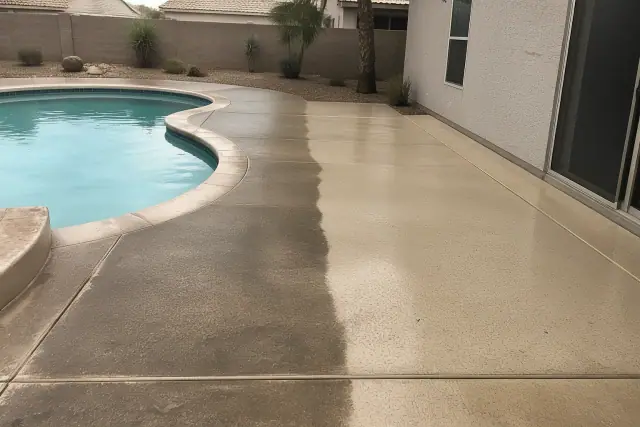
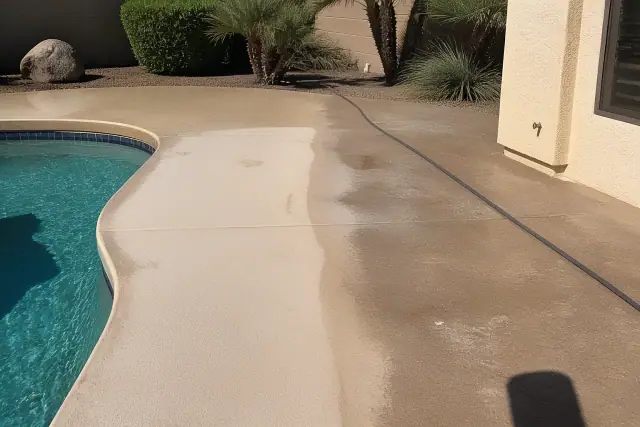
A concrete pool deck in Phoenix, AZ, showing the difference between stained and pressure-washed surfaces.

We clean pool surrounds section by section, checking calcium, algae, organic staining, cracks, and spalled areas before washing. Hot-water equipment and material-appropriate settings help restore an even surface without sending uncontrolled runoff toward the pool.

Request Estimate

Patio Pressure Washing

Pressure washing a concrete pool deck in Phoenix, AZ, showing the clean surface compared to the stained area.

Patio cleaning addresses traffic soil, desert dust, leaf tannins, food residue, and oils around outdoor living areas. Furniture, planters, built-in fire pits, and restricted side-yard access are included in the preparation plan so hoses and equipment can move safely.

Request Estimate

Travertine Soft Washing

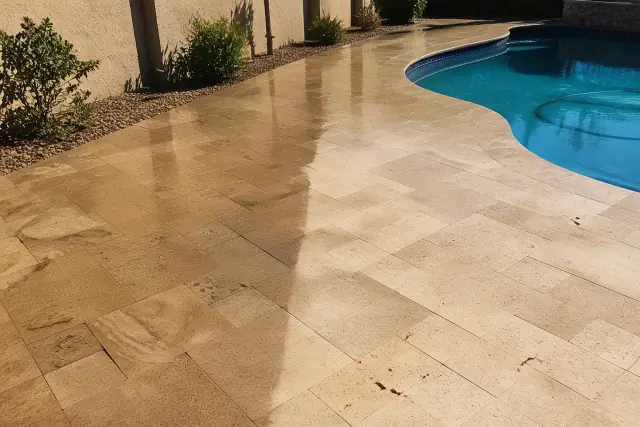
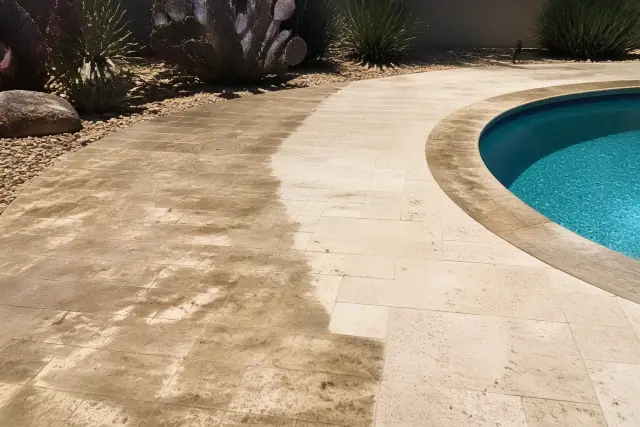
Travertine soft washing on a pool deck showing cleaned and stained sections at a residence in Phoenix, AZ.

Travertine is calcareous and porous, so acidic cleaners or aggressive pressure can etch, dull, and pit its honed or tumbled finish. We typically clean it below 1,000 PSI with pH-neutral, stone-safe products and test unfamiliar treatments in an inconspicuous area first.

Request Estimate

Paver Cleaning and Joint Protection

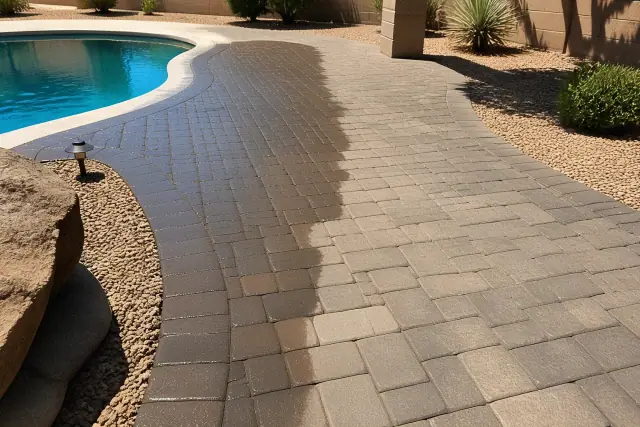
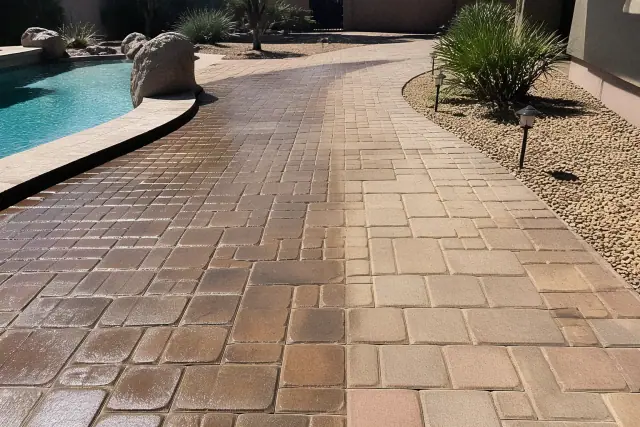
Stone paver walkway with clean joints at a residential pool deck in Phoenix, AZ, surrounded by desert landscaping.

Concrete, clay brick, and natural-stone pavers require different chemistry and pressure. We identify whether joints contain polymeric sand, regular sand, or mortar, then use a consistent fan-tip angle that avoids concentrating force into the joint lines.

Request Estimate

Pool Deck Stain Removal

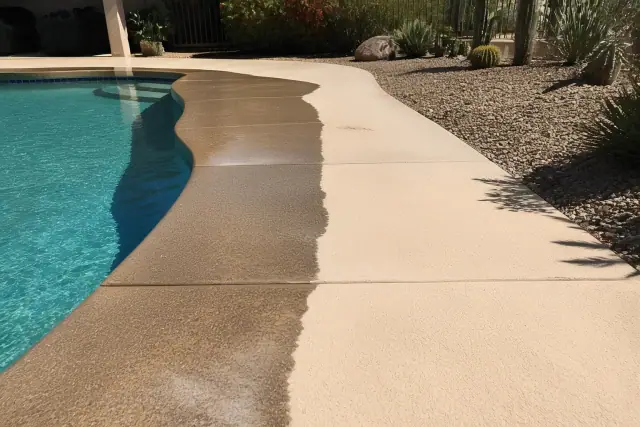
A concrete pool deck in Phoenix, AZ, showing the difference between stained porous concrete and a clean, finished surface.

Rust from patio furniture, leaf tannins, sunscreen oils, and algae are not interchangeable stains. Treatment may call for oxalic acid-based rust products, oxygen-based organic cleaners, citrus-based degreasers, or a poultice for set-in oil, always matched to the surface underneath.

Request Estimate

Pool Deck Cleaning and Sealing

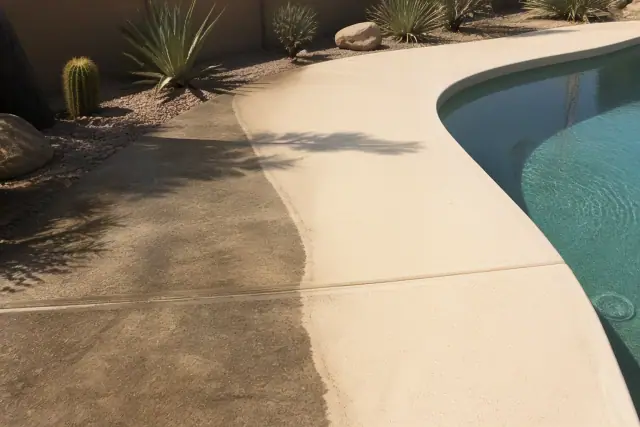
Half-cleaned concrete pool deck with desert landscaping at a home in Phoenix, AZ.

Once a cleaned deck dries fully, we assess whether a breathable penetrating sealer or topical acrylic sealer fits the material and desired finish. Sealing slows water absorption, UV-related fading, and the penetration of minerals or pool chemicals while making later maintenance less abrasive.

Request Estimate
Material-Specific Cleaning

Cleaning Methods by Surface Type

Concrete can tolerate settings that would damage travertine, while pavers add joint stability to the equation. These material profiles show why professional pool deck cleaning depends on controlled pressure, nozzle width, temperature, chemistry, and dwell time rather than maximum force.

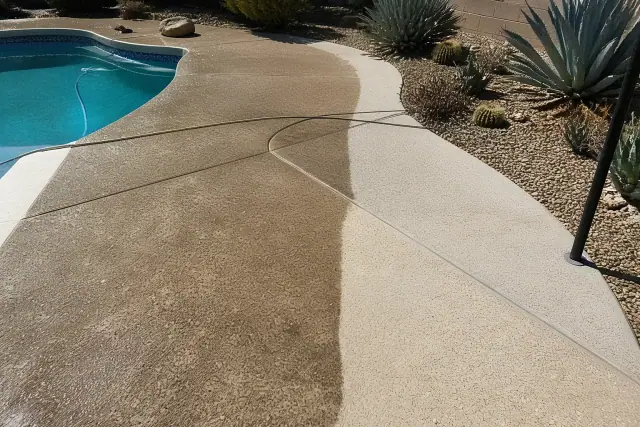
Half-cleaned concrete pool deck with agave landscaping in a sunny backyard in Phoenix, AZ.

Broadcast Concrete

Uncoated broadcast concrete generally tolerates stronger mechanical cleaning than decorative or natural-stone surfaces. We still inspect cracks, spalling, and heavily stained areas before selecting the working setup.

  • Typical working range: 3,000-3,500 PSI
  • Typical nozzle angle: 15-25 degrees
  • Hot water helps release baked-on grime
  • Pre-treatment is matched to the stain profile
  • Controlled passes reduce visible striping
Request Estimate
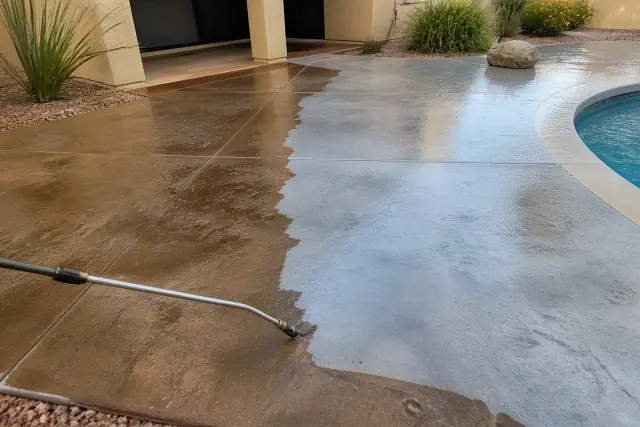
Stamped and colored concrete pool deck cleaning in progress in Phoenix, AZ, showing stained and rinsed surfaces.

Stamped and Colored Concrete

Decorative concrete needs a lower-pressure approach to protect the finish coat, pattern detail, and existing sealer. An inconspicuous test area helps confirm that the selected chemistry and fan pattern will not dull or streak the surface.

  • Typical working range: 1,500-2,000 PSI
  • Wider fan patterns spread cleaning force
  • Finish coats are checked before washing
  • pH-appropriate chemistry limits dulling
  • Existing sealer condition guides the method
Request Estimate
Wet travertine and calcareous stone pool deck undergoing cleaning in Phoenix, AZ with prickly pear cactus in the background.

Travertine and Calcareous Stone

Travertine reacts to acid much like marble and can lose its honed or tumbled character when etched. Low-pressure application and stone-safe chemistry clean its natural pits and troughs without opening the pores further.

  • Soft washing is typically kept under 1,000 PSI
  • pH-neutral, stone-safe cleaners protect calcite
  • Acid-based cleaners are avoided
  • Oils and minerals are treated separately
  • Full drying comes before sealer assessment
Request Estimate
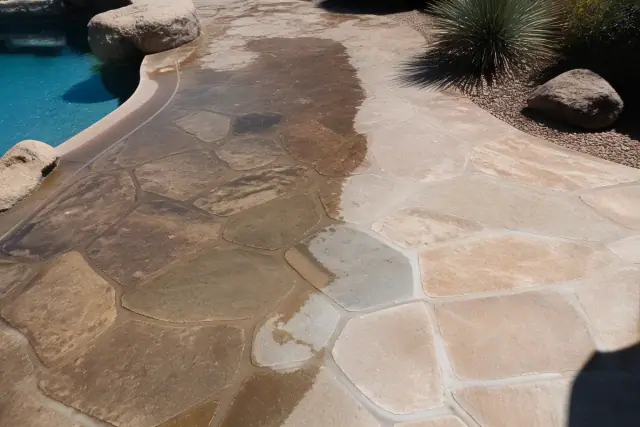
Partially cleaned flagstone, slate, and natural stone pool deck in the sun in Phoenix, AZ.

Flagstone, Slate, and Natural Stone

Softer or honed stone and mortar-set patios need careful pressure distribution. We use wider fan tips and surface-appropriate cleaning agents so the method lifts soil without eroding edges, opening pores, or disturbing mortar joints.

  • Typical soft-wash range: 500-1,200 PSI
  • Wide fan tips reduce concentrated impact
  • pH-balanced products respect natural stone
  • Mortar condition is checked before rinsing
  • New treatments are tested in a hidden area
Request Estimate
Cleaned stone pavers and brick on a pool deck and patio in Phoenix, AZ.

Pavers and Brick

Paver cleaning must account for both the surface unit and the joint system beneath it. Existing erosion is flagged before work so loose or missing joint sand is not mistaken for cleaning damage and can be considered for resanding.

  • Concrete, clay, and stone pavers are identified
  • Polymeric sand, regular sand, or mortar is checked
  • Fan tips stay at a consistent distance and angle
  • Pressure is kept out of vulnerable joint lines
  • Eroded joints are flagged for possible resanding
Request Estimate
Finding Your Right Fit

Choosing the Right Cleaning Approach

The right method starts with surface material, finish condition, joint type, stain severity, and access. Photos or an on-site walkthrough help us distinguish routine soil from calcium, algae, rust, tannins, or set-in oil before we set pressure, chemistry, and scope.

Material-Specific Calibration

Technicians distinguish broadcast and decorative concrete from travertine, flagstone, slate, and paver systems before starting. Hot water, nozzle selection, working pressure, cleaner pH, dwell time, and agitation are then calibrated to that surface and stain profile.

Pool and Runoff Protection

Pool surfaces, skimmers, filters, nearby drains, furniture, planters, and equipment are cleared or covered as needed. Overspray is skimmed promptly, pool-safe products are selected where incidental contact is possible, and runoff is directed toward permitted drainage areas.

Residential and Commercial Planning

A residential deck may take a few hours, while an HOA, apartment, or resort property can have several thousand square feet requiring a full-day or multi-day schedule. Commercial plans can include larger crews, water-reclamation planning, after-hours work, stricter turnaround windows, and property-management documentation.

What Sets Us Apart

Why Phoenix Chooses Our Surface Care

Phoenix Pressure Washers combines material-specific training, general liability insurance, hot-water equipment, and controlled wastewater practices for poolside work. Estimates reflect square footage, surface type, stain severity, access, and optional sealing, using photos or a walkthrough to define the actual condition instead of a generic per-visit assumption.

Request an Estimate

Hard-Water Calcium Scale

Phoenix and Scottsdale water sources can leave visible calcium scale on pool decks and coping within a single season. Mildly acidic, pool-safe descaling products may suit compatible concrete or sealed surfaces, while travertine requires non-acidic care because its calcite structure can etch.

Sunscreen and Oil Residue

Sunscreen and tanning oils bind to porous concrete and travertine around loungers and steps, creating dark, slick patches. Citrus-based, pool-safe degreasers lift oily residue without leaving the film associated with general dish soap on porous stone.

Algae and Mildew in Joints

Warm nights, shade, and pool humidity create a microclimate where black algae and mildew settle into grout lines and joints. A correctly diluted sodium hypochlorite treatment needs dwell time and mechanical scrubbing in those lines; a surface rinse alone can leave growth rooted in the pores.

Etching from Excess Pressure

A concentrated wand can cut stripes into concrete, pit travertine, streak honed stone, or force water below pavers. Surface identification and pressure regulation prevent cleaning for appearance from becoming permanent substrate damage.

Eroded Paver Joints

Directing pressure into polymeric or regular sand joints can remove the material that helps keep pavers stable. We hold fan tips at a consistent distance and angle, avoid vulnerable joint lines, and flag existing erosion when resanding should be considered.

Rust and Organic Stains

Patio furniture can leave rust marks, while palo verde and mesquite debris creates tannin staining that darkens a deck over a summer. Oxalic acid-based treatments target compatible rust stains, and oxygen-based cleaners address organic discoloration without assuming one chemical fits every material.

How it works

Our Pool Deck Cleaning Process

Each project follows a deliberate sequence from inspection and pool protection through stain treatment, washing, and final review. The sequence is consistent, while the pressure, chemistry, dwell time, and agitation change with the surface and buildup.

01.

Walkthrough and Surface Check

We identify the deck material, finish, paver-joint type, stains, cracked concrete, and spalled areas before water touches the surface. This establishes safe settings and flags pre-existing conditions.

02.

Protect Pool and Prep Area

Furniture and planters are cleared, pool equipment and surfaces are covered as needed, and nearby drains are protected. Filters and skimmers remain covered during the work, and access routes are planned around hoses.

03.

Match Pre-Treatment to Stain

Calcium, algae, rust, tannins, and oil require different products. We select a pool-safe and material-compatible treatment, then apply it evenly to the affected sections.

04.

Allow Dwell Time and Agitate

The pre-treatment is allowed time to loosen the specific buildup. Grout lines, joints, natural pits, and set-in spots receive mechanical scrubbing where chemistry and pressure alone would leave embedded residue.

05.

Controlled Pressure or Soft Wash

We wash in controlled sections with the selected pressure, temperature, nozzle angle, and fan width. Softer stone receives low pressure, while sound broadcast concrete can use stronger settings without applying them to every surface nearby.

06.

Rinse, Review, and Aftercare

We complete a controlled rinse, direct runoff away from the pool shell, remove protection, and review the uniformity of the finished surface. After drying, we can assess sealer needs and explain weekly rinsing, sweeping, and prompt spill cleanup.

Restore Your Outdoor Space

Schedule Pool Deck &
Patio Cleaning in
Phoenix

Request an estimate based on your deck's square footage, material, stain severity, access, and sealing needs. Photos or an on-site walkthrough help define the right scope for residential, HOA, apartment, resort, or other commercial pool areas.

Poolside Surface Help

Pool Deck & Patio Cleaning FAQs

Find practical answers about Phoenix pool deck materials, cleaning methods, maintenance, pricing, sealing, paver joints, and residential or commercial service planning.

Call About Your Deck

Skim debris, brush pool walls and steps, rinse the deck, and check the filter basket at least once a week during peak summer. Test chlorine and pH twice a week in summer, clean sunscreen or oil spills the same day, and consider professional deck cleaning every 6-12 months when routine care no longer removes embedded buildup.

Travertine and cool-deck concrete coatings are common choices because they stay cooler underfoot than dense pavers or dark concrete. Light-colored pavers and flagstone can also perform well thermally, though joints may need more maintenance than poured concrete.

Use a pre-treatment matched to the stain, allow adequate dwell time, agitate grout lines or pores where needed, and rinse at pressure appropriate for the material. Concrete can tolerate higher pressure, while travertine and natural stone generally need soft washing below 1,200 PSI and an inconspicuous test area first.

Dish soap can loosen a light grease spot, but it may leave dirt-attracting residue on porous travertine or concrete and can dull some sealed finishes with repeated use. It also does not address embedded algae, calcium scale, or set-in stains, which need surface- and stain-specific chemistry.

Maricopa County Environmental Services Department regulations address public and semi-public pools, including barriers, drain covers, water quality, and poolside conditions. Residential backyard pools follow barrier and safety provisions within the City of Phoenix building-code adoption of the International Swimming Pool and Spa Code, while clean deck surfaces help public properties manage slip-resistance concerns.

Light-colored travertine and textured cool-deck acrylic coatings generally stay cooler than dark, dense pavers or plain concrete in direct Phoenix sun. Dirt and oil can darken any surface and increase heat absorption, so regular cleaning supports the material's intended appearance and performance.

Typical source ranges are $149-$299 for decks under 500 square feet, $250-$450 for 500-1,000 square feet, and $450 or more for decks above 1,000 square feet. Commercial work is often $0.15-$0.60 per square foot; surface material, staining, access, furniture setup, and added sealing can change the estimate.

Travertine is a porous, calcareous stone that can etch under acidic cleaners and pit or streak under aggressive pressure. Low-pressure application with pH-neutral, stone-safe chemistry lifts grime from its natural pores without eroding the finish.

Pool surfaces, filters, skimmers, equipment, and nearby drains are covered or protected as needed before washing. Pool-safe cleaners are used where incidental contact is possible, overspray is skimmed promptly, and runoff is directed away from the pool shell toward permitted drainage areas.

A cleaned deck typically needs 24-48 hours to dry, depending on humidity and surface porosity, before sealer application. Penetrating sealers on travertine and pavers generally last 2-3 years in direct Phoenix sun, while topical concrete sealers may need earlier reapplication in high-traffic areas.

Yes, when the paver type and joint material are identified before cleaning. A fan-tip nozzle held at a steady distance and angle keeps concentrated pressure out of polymeric sand, regular sand, or mortar joints; existing erosion can then be flagged for resanding.

HOA, apartment, and resort pool decks usually involve larger areas, tighter turnaround windows, property-management documentation, and more detailed water-reclamation planning. The cleaning methods remain material-specific, but equipment, crew size, scheduling, and compliance considerations scale with the site.

Calcium scale, black algae, mildew, rust, leaf tannins, sunscreen, and set-in oil each respond to different chemistry or agitation. Material compatibility matters too: a treatment appropriate for broadcast concrete may etch travertine or disturb an existing sealer.