Proudly serving Phoenix, Mesa, Scottsdale, Tempe, Chandler, Glendale & surrounding areasCall or Text 24/7: 602-449-0503
Concrete Cleaning Guide

What Should You Avoid Using When Cleaning Concrete Surfaces?

At Phoenix Pressure Washers, we have restored driveways, pool decks, and commercial pads across the Salt River Valley after damaging DIY cleaning attempts. Concrete is porous and alkaline, so the wrong chemical, brush, or pressure setting can etch, stain, or strip the surface instead of cleaning it.

Quick Summary

  • Avoid wire brushes, muriatic acid, and full-strength bleach on decorative, colored, stamped, or sealed concrete.
  • Heavy soap mixtures leave residue, while concentrated or repeated vinegar use can etch concrete and dull sealed finishes.
  • Rock salt and most de-icing salts can contribute to spalling and surface flaking as water enters the pores.
  • Avoid pressure above 3,000 PSI and a 0-degree tip, which can pit concrete or strip the cream layer from a newer slab.

What to Avoid on Concrete

Harsh Tools and Chemicals

Wire brushes shed metal that can rust inside concrete pores, while strong acids etch the surface paste and pull pigment from colored finishes. Never mix bleach with ammonia-based products, and do not assume an undiluted household cleaner is safe for masonry.

Controlled Pressure

A narrow, high-pressure jet can cut channels, pit the surface, or peel a failing sealer. Textured, stamped, and sealed concrete needs a gentler low-pressure approach than plain broom-finished gray concrete.

Match Cleaner to Stain

Use pH-balanced detergent for routine soil, concrete-safe degreaser for oil, oxygen bleach for algae, and a dedicated remover for rust or efflorescence. Choose the cleaner and pressure according to the slab's finish, age, and stain rather than relying on one mixture for every job.

Concrete Damage to Inspect

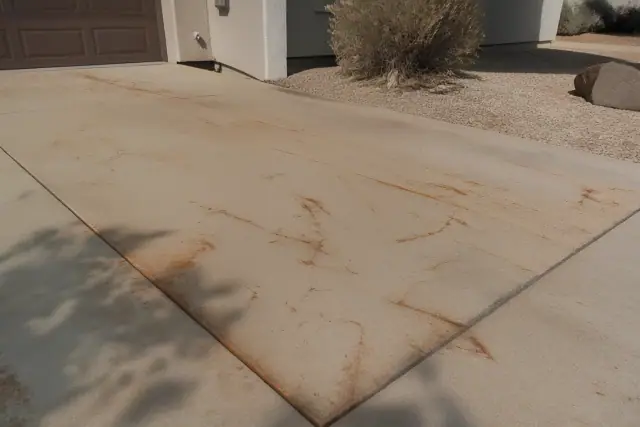
Wire-Brush Rust Embedded in Concrete

Wire-brush rust stains embedded in a residential concrete driveway in Phoenix, AZ, near desert landscaping.

Broken metal bristles can lodge in a porous slab and produce orange rust staining. Aggressive scrubbing may leave a deeper stain than the original dirt.

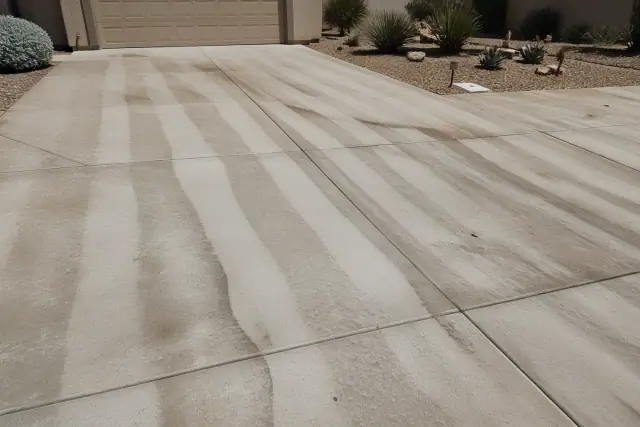
Pressure-Washer Etching and Cream-Layer Loss

Concrete driveway in Phoenix, AZ showing surface etching and cream-layer loss from pressure washing.

A pinpoint spray can leave permanent striping, pitting, and exposed aggregate beside otherwise intact concrete. Rinsing cannot reverse the lost cream layer.

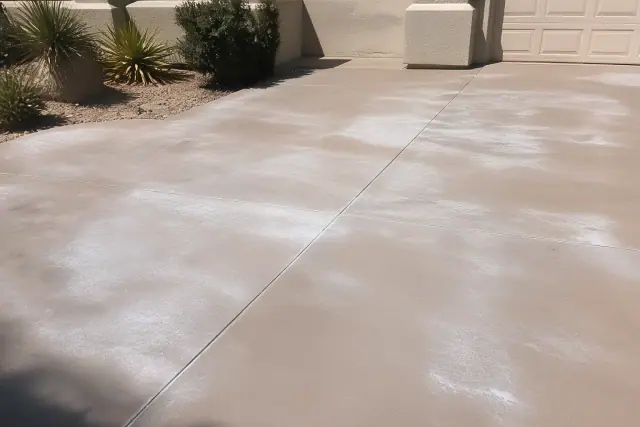
Blotched Sealer After Harsh Chemical Cleaning

Milky, uneven sealer blotches on a residential concrete driveway in Phoenix, AZ.

Patchy whitening, dull areas, and peeling sealer can follow harsh chemical cleaning on stamped or colored concrete. A hidden-area test can reveal incompatibility before the full surface is treated.

Safer Cleaning Snapshot

Identify the Concrete Finish

First determine whether the surface is plain, colored, stamped, textured, or sealed. A method tolerated by plain gray concrete may discolor pigment, abrade texture, or weaken a coating.

Identify the Stain

Light dirt, oil, rust, algae, calcium scale, and efflorescence do not respond to the same treatment. Spot-test a compatible product before expanding the treatment area.

Use a Wide, Controlled Spray

For driveways and patios, use a 2,000-3,000 PSI range with a 15- to 25-degree tip, adjusting downward for textured, stamped, or sealed finishes. Low-pressure application with pH-balanced surfactants can lift growth without abrading delicate surfaces.

Stop Before Damage Spreads

Pause if the concrete lightens unevenly, the sealer lifts, aggregate becomes exposed, or new lines appear in the spray path. Changing the cleaner or reducing pressure early can prevent a small test area from becoming a full-slab restoration.

Concrete Cleaner Planning Matrix

Product or methodConcrete riskSafer direction
Wire or metal brushMetal fragments can lodge in pores and leave orange rust stains.Use a concrete-safe nonmetal cleaning method.
Muriatic or other strong acidAcid can etch the paste and pull pigment from colored or stamped concrete.Match a masonry-safe cleaner to the stain.
Full-strength bleachIt can whiten or blotch colored, stamped, or sealed finishes.Use a properly diluted solution only on a compatible surface.
Heavy soap mixtureResidue can attract grime, create streaks, and hinder sealer adhesion.Reserve diluted dish soap for light spot cleaning.
Rock salt or de-icing saltMoisture in the pores can contribute to spalling and surface flaking.Use calcium magnesium acetate sparingly and rinse it away.
Excessive pressure or a pinpoint tipThe spray can pit the slab, cut channels, or strip the cream layer.Use controlled pressure and a wider fan tip.

Why the Wrong Cleaner Damages Concrete

Concrete's alkaline paste and open pores make it vulnerable to chemical reactions and embedded residue. Acids dissolve and roughen the paste, metal fragments rust below the surface, soap film holds new grime, and salt-related moisture movement contributes to flaking. A harsh treatment can therefore replace a removable stain with permanent texture, color, or sealer damage.

Conditions That Change the Approach

Finish, sealer condition, stain type, runoff, and exposure all affect the cleaning choice. Phoenix heat can bake oil and chemical residue into concrete during 110-degree summer weather, while roughly 300+ sunny days a year contribute to UV-faded color and sealer wear. Shaded north-facing slabs may also hold winter moisture or develop efflorescence, making acids and de-icing salts especially poor shortcuts.

Common Follow-Up Questions

For light dirt, use a pH-balanced concrete detergent or a small amount of diluted dish soap; oil, rust, algae, and efflorescence need cleaners made for those stains. Diluted bleach can address biological growth on plain gray concrete, but full-strength bleach is a poor choice for colored, stamped, or sealed finishes. Calcium magnesium acetate is gentler than rock salt when traction is necessary, though it should still be used sparingly and rinsed away. Residential sealers commonly need reapplication every two to three years, and a cleaned slab should dry fully, typically 24 to 48 hours in Phoenix's low humidity, before resealing.
Concrete Cleaning Help

Unsure What Your Concrete Needs?

Share the concrete finish, stain, sealer condition, and any cleaner already used. A Phoenix pressure-washing team can help match the detergent, pressure, and rinse method to the surface before further damage occurs.