12-Month Baseline
Start with one complete soft wash every 12 months for a typical Phoenix home, then adjust the calendar to the property's actual buildup.
Phoenix Pressure Washers recommends a full soft wash about once every 12 months for most homes in the Phoenix metro area. Stucco homes, properties near desert washes, and exteriors shaded by mesquite or palo verde trees may need attention every 6 to 9 months as dust, hard-water spotting, and organic growth return.
Start with one complete soft wash every 12 months for a typical Phoenix home, then adjust the calendar to the property's actual buildup.
Porous stucco, north-facing shade, irrigation overspray, heavy dust, and mesquite or palo verde cover can shorten the interval to 6 to 9 months.
Check shaded walls, rooflines, and sprinkler zones for streaking, dust film, or hard-water spots instead of relying only on the date.
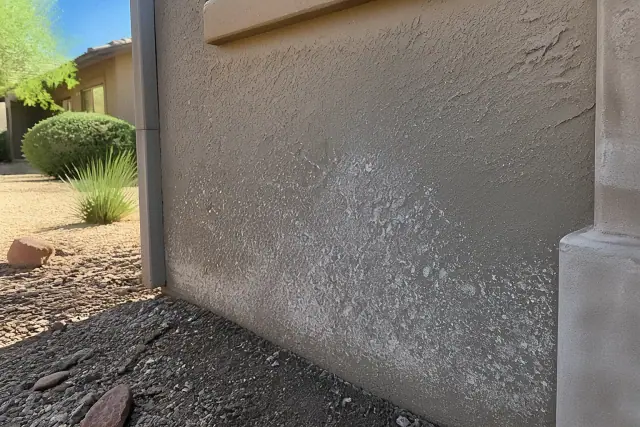
A chalky film and mineral spots around sprinkler heads show when porous stucco is holding more than routine surface dust.
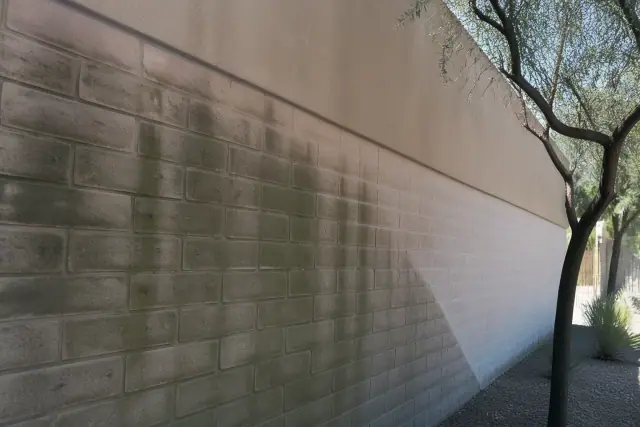
North-facing shade can let algae and mildew return sooner than on walls receiving full southern sun.
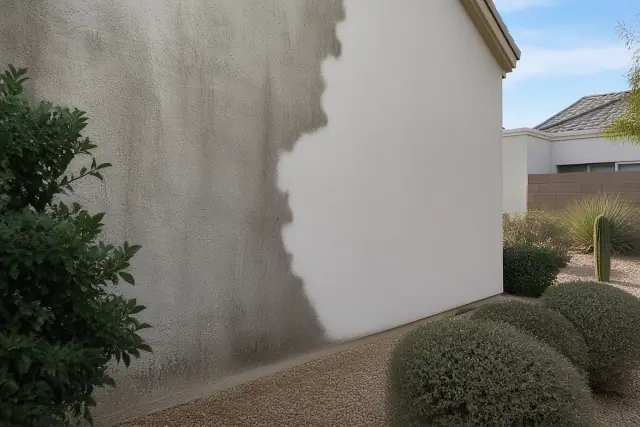
An even application, typically under 100 PSI at the surface, cleans painted stucco without relying on abrasive mechanical force.
Every 12 months is the practical baseline for most single-story and two-story homes in the Phoenix metro area.
Routine stucco often needs 9 to 12 months; heavy dust can shorten that to 6 to 9 months, while vinyl or fiber cement may reach 12 to 18 months.
Tile or shingle roofs run 12 to 24 months; driveways about 12 months; covered patios 6 to 12 months; pool decks 6 to 9 months; and solar panels every 6 months.
Soft washing stays typically under 100 PSI at the surface; concrete and pavers instead use pressure washing at 1,500 to 3,000 PSI.
| Surface or Condition | Typical Interval | Why It Shifts |
|---|---|---|
| Most Phoenix home exteriors | Every 12 months | The baseline for routine dust and exterior buildup. |
| High-dust stucco, homes near washes, or tree shade | Every 6 to 9 months | Porous stucco, dust exposure, and shaded growth bring cleaning forward. |
| Routine stucco | Every 9 to 12 months | The textured surface holds dust and hard-water minerals. |
| Shaded, irrigated vinyl or fiber cement | Every 12 to 18 months | These materials resist staining better, but shaded corners can hold mildew. |
| Tile or shingle roof | Every 12 to 24 months | Timing depends on algae streaking and monsoon dust buildup. |
| Covered patio | Every 6 to 12 months | Frequent use and cooking residue shorten the interval. |
| Pool deck | Every 6 to 9 months | Chlorine splash and suntan-oil residue can create buildup. |
| Concrete driveway | Every 12 months | Oil spots and tire marks may call for earlier pressure washing. |
Frequency is a maintenance range, not a rigid appointment date. Annual cleaning suits the majority of Phoenix homes, while newer stucco with minimal landscaping and full southern sun exposure may stretch to 18 months. Homes with reflective coatings, little shade, and low irrigation overspray can sometimes reach 2 years, but that is uncommon in the Salt River Valley. After a baseline clean removes years of bonded, oxidized dirt, use fresh streaking, dust film, and hard-water marks to set the next visit.
The schedule turns on five variables: exterior material, weather, airborne dust, tree cover, and previous cleaning history. Phoenix averages under 8 inches of rainfall annually, so wind-driven Sonoran Desert dust is a primary soiling agent. Haboobs from June through September add fine particulate, while hard-water irrigation overspray leaves mineral spots and north-facing shade supports algae. Porous stucco, common on local homes built since the 1970s, holds dust and mineral staining longer than vinyl or fiber cement, and mesquite, palo verde, and citrus trees create shaded microclimates.
A standard 1,800- to 2,500-square-foot single-story home usually takes 1.5 to 2.5 hours, including setup, application, 10 to 15 minutes of detergent dwell time per section, and rinsing; two-story homes or jobs that include roof cleaning may take 3 to 5 hours. A standard single-story soft wash generally costs $250 to $600, while larger two-story properties may run $400 to $900 depending on square footage, story count, access, and included surfaces. October through March usually provides the best working conditions, although May through June can clear winter dust before monsoon activity; in July and August, surface temperatures can exceed 150 degrees and cause detergent to flash-dry.
If the roof, siding, or hardscape has not been cleaned in over a year, or visible streaks, dust film, or sprinkler marks have returned, request a property-specific assessment. Photos or an on-site review can help set the right scope and interval.