Combined Clean-and-Seal Range
Expect $1 to $3.50 per square foot for a combined Phoenix cleaning and sealing project. Most residential jobs land near $2.25 per square foot.
Phoenix Pressure Washers explains why paver cleaning and sealing costs in Phoenix vary with square footage, surface material, staining, joint-sand loss, and sealer grade. Understanding those variables helps property owners compare a simple cleaning quote with a complete clean-sand-seal scope before requesting an estimate.
Expect $1 to $3.50 per square foot for a combined Phoenix cleaning and sealing project. Most residential jobs land near $2.25 per square foot.
Clay brick porosity, permeable joints, oil or rust staining, algae, lost sand, and the selected sealer chemistry all change the labor and material required.
Measure the complete paved area and confirm whether cleaning, joint-sand repair, drying time, and the sealer coat are included before comparing quotes.
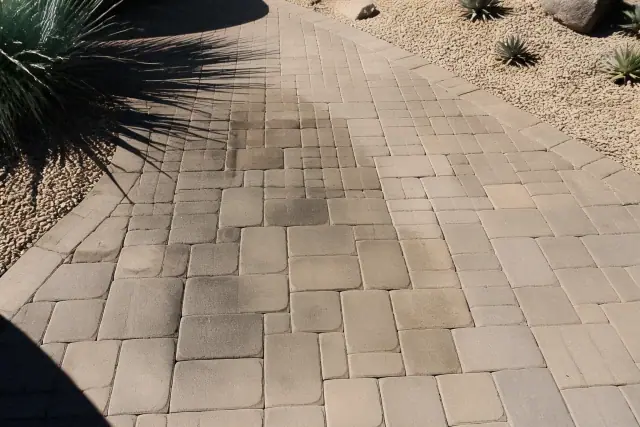
Concentrated oil and rust staining beside ordinary dust film. Specialized treatment adds labor beyond a straightforward wash.
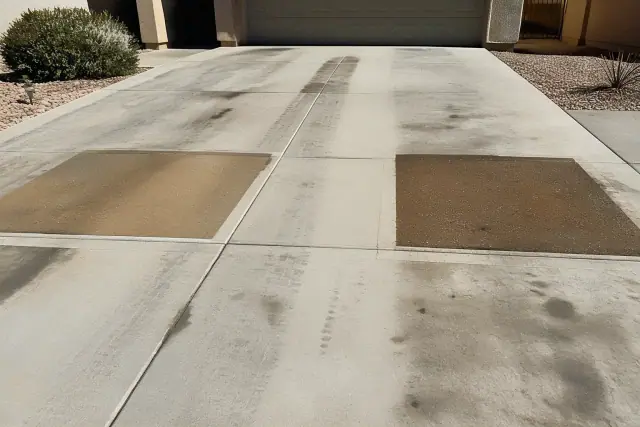
Compare a basic sealed surface with the deeper tone of a color-enhancing finish. Premium UV-stable formulas can raise the price range.
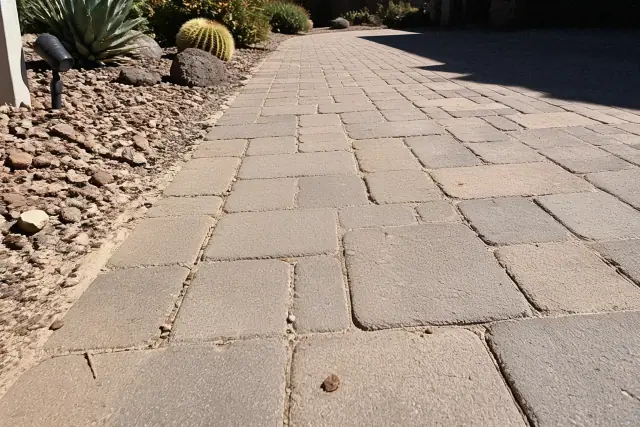
Open or uneven joints where monsoon runoff or sprinkler overspray removed sand. A full joint re-sand costs more than a minor top-off and should happen before sealing.
Sealing alone generally runs $0.50 to $2.50 per square foot in Phoenix, while cleaning and sealing together runs $1 to $3.50. Comparable driveway pricing can land around $2.44 per square foot once tax is included.
For many Phoenix properties, sealing helps slow salt efflorescence and UV fading while reducing how often washed-out joint sand needs replacement.
Residential projects can range from about $300 for a small walkway to $2,500 for a large driveway or pool-deck combination, depending on total area and sealer grade.
The price includes labor-intensive cleaning, drying, joint repair, and even sealer application. A standard 5-gallon bucket covering roughly 1,000 square feet can cost close to $295, about $0.30 per square foot in material before labor, while premium UV-stable formulas cost more.
| Scope | Typical Price | What Changes the Range |
|---|---|---|
| Cleaning only | $0.30 to $0.55 per square foot | Oil, rust, algae, efflorescence, and specialized treatment needs |
| Sealing only | $0.50 to $2.50 per square foot | Sealer grade, paver material, and surface porosity |
| Cleaning and sealing | $1 to $3.50 per square foot; most jobs near $2.25 | Surface condition, sand loss, and selected sealer |
| Premium sealer | $2.50 to $4.00 per square foot | Wet-look, color-enhancing, or polymer-modified formulas |
| Patio sealing | $1 to $2.75 per square foot | Area size, staining, and standard-grade sealer suitability |
| Pool deck sealing | $1.50 to $3.75 per square foot | Slip-resistant additives, coping, and nearby equipment |
| Driveway sealing | $1.50 to $3.50 per square foot | Traffic-durable sealer and whether joint sand is included |
Cleaning removes dirt, algae, mold, and mineral efflorescence with low-pressure soft washing or controlled pressure washing. Sealing is a separate step performed after the surface is fully dry, so a full clean-sand-seal quote covers substantially more work than a rinse alone. Professional scope may also include weed and moss removal, polymeric sand repair, and an even sealer coat selected for joint stabilization and paver compatibility.
Square footage is the main price driver, followed by paver material and condition. Porous clay brick can need different chemistry than manufactured concrete, while permeable systems need a compatible sealer that preserves joint drainage. Heavy oil, rust, algae, or efflorescence adds treatment time; driveways need traffic-durable coatings, and pool decks may need slip-resistant additives around coping and equipment. Phoenix also records more than 100 days above 100 degrees in a typical summer, making UV resistance especially important for south- and west-facing hardscape.
How long does paver cleaning and sealing take? Most residential jobs use one day for cleaning and a second day for sealing because the surface typically needs 24 to 48 hours to dry; larger commercial work may take two to three days. How often should Phoenix pavers be resealed? The usual local interval is 2 to 3 years, rather than 3 to 5 years in milder climates. Should damaged pavers be sealed? Cracked, sunken, or heaving units affected by unstable soil should be repaired first. When comparing local providers, confirm an active Arizona Registrar of Contractors classification and wash-water containment practices consistent with Arizona Department of Environmental Quality guidance and City of Phoenix stormwater rules.
Share the paved area's approximate square footage, surface type, staining, joint condition, and preferred finish. An on-site measurement can confirm whether the right scope is cleaning only, sealing only, or a complete clean-sand-seal project.